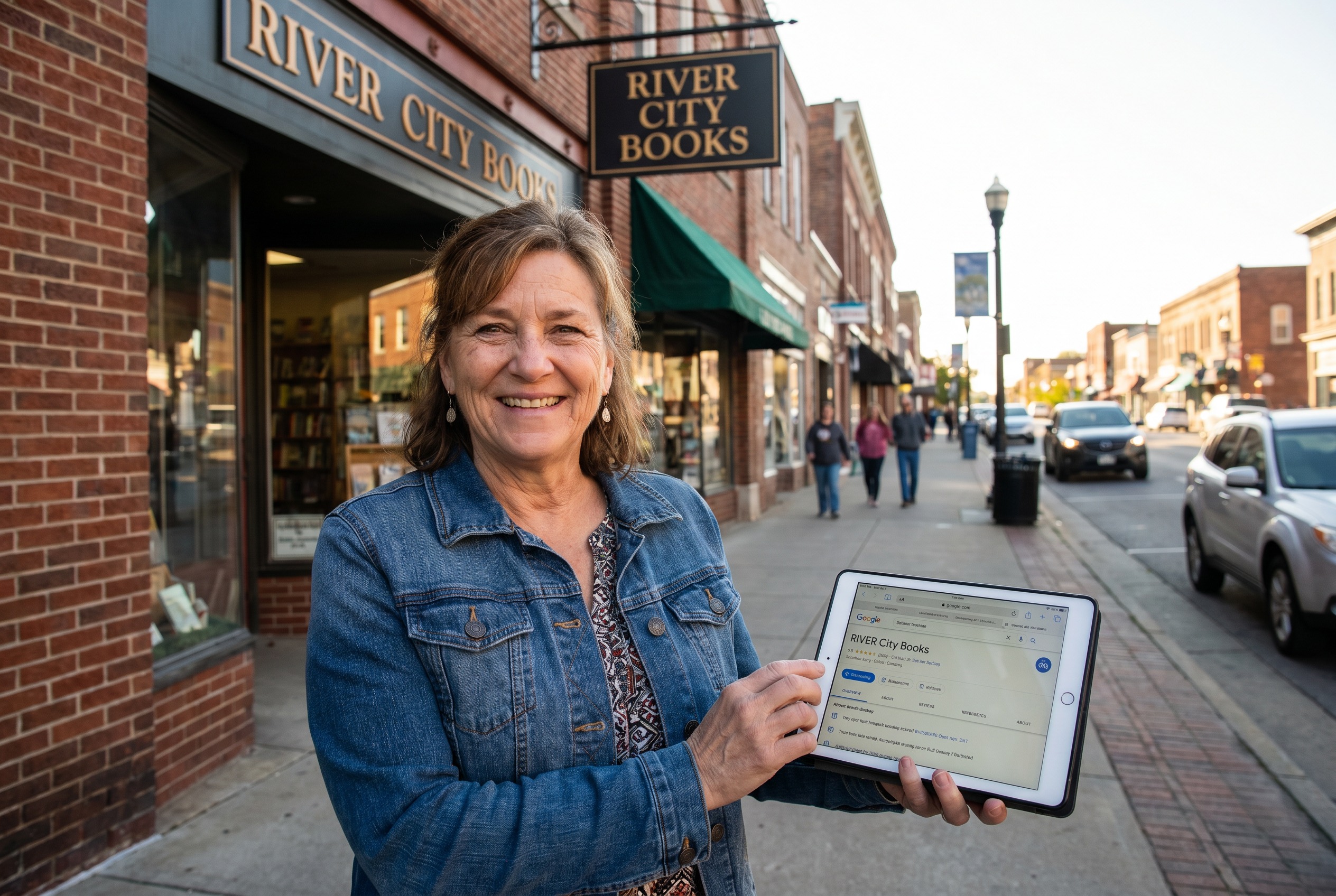
Online Reputation Management for Small Businesses: Why Reviews Drive Growth
Online reputation management for small businesses has become one of the most important parts of digital marketing because customers often decide whether they trust a business before they ever make contact.
They read Google reviews. They compare star ratings. They look for recent customer feedback. They check how a business responds when someone has a problem. They may also see reviews, comments, social posts, and recommendations across several platforms before reaching a website.
For local businesses in Lynchburg, throughout Central Virginia, and across the country, reputation can directly affect visibility, clicks, calls, and conversions. A business may have strong services, a skilled team, and a professional website, but if the online reputation looks thin, outdated, or unmanaged, potential customers may hesitate.
That is why reputation management should be treated as part of a growth strategy, not just cleanup when something goes wrong.
What Is Online Reputation Management?
Online reputation management is the process of monitoring, improving, and protecting how your business appears online. For small businesses, that usually includes Google reviews, Facebook recommendations, directory listings, social media comments, testimonials, star ratings, and brand mentions.
The goal is not to make every business look perfect. Customers do not expect perfection. They expect signs that a business is active, trustworthy, responsive, and consistent.
A strong reputation management strategy helps customers feel more confident choosing your business. It also helps search engines and online platforms better understand whether your company is credible in the local market.
Google’s local ranking guidance explains that local results are based primarily on relevance, distance, and prominence. Google also notes that more reviews and positive ratings can improve local ranking, which connects reputation directly to local search visibility (Google Business Profile Help).
Why Online Reputation Management for Small Businesses Matters
Online reputation management for small businesses matters because reviews often act as the bridge between being found and being chosen.
A potential customer may discover your business through a Google search, a social media post, a referral, or a paid ad. But before they call, book, visit, or request a quote, they are likely to look for proof. Reviews provide that proof in the customer’s own language.
BrightLocal’s 2026 Local Consumer Review Survey found that consumers continue to rely heavily on reviews when evaluating local businesses, with review freshness, star ratings, and business responses becoming increasingly important parts of the decision process (BrightLocal).
That behavior makes sense. Reviews help people reduce risk. A homeowner hiring a contractor, a patient choosing a dental office, or a business owner comparing marketing agencies wants reassurance before making a decision.
For small businesses, that reassurance can be the difference between a lead and a lost opportunity.
Reviews Influence Local SEO and Customer Trust
Reviews affect growth in two major ways: they can support local visibility, and they can influence whether people take action once they find you.
From a local SEO perspective, reviews contribute to the overall prominence of a business online. They are not the only ranking factor, but they are part of the trust signals search engines evaluate when showing local results. A business with consistent reviews, complete information, and active engagement sends stronger signals than a business with outdated or sparse feedback.
From a customer perspective, reviews help answer questions that a website may not fully answer. Did the company show up on time? Was the team professional? Did the service solve the problem? Did the business respond when something needed attention?
Those details matter because people trust patterns. One review may not change a decision, but a steady collection of recent, specific reviews can build confidence quickly.
This is especially important for small businesses competing against larger brands. Bigger companies may have more advertising power, but local businesses can often win trust through stronger relationships, better service, and visible community credibility.
Why Responding to Reviews Builds Credibility
Responding to reviews is one of the most overlooked parts of reputation management.
When a business responds to positive reviews, it shows appreciation. When it responds thoughtfully to negative reviews, it shows accountability. Both types of responses matter because they are visible to future customers.
A good response does not need to be long. It should be professional, specific when appropriate, and calm. Defensive or copy-paste responses can do more harm than good. Customers can usually tell when a business is genuinely paying attention.
Responding also helps keep your online presence active. A Google Business Profile with recent reviews, current business information, updated photos, and professional responses looks more trustworthy than a profile that appears neglected.
For busy business owners, this can be difficult to manage consistently. Reviews come in at different times, across different platforms, and not always when the business has time to respond. That is why review management often works best as part of a larger marketing process.
Reputation Management Extends Beyond Google Reviews
Google reviews are important, but they are only one piece of online reputation.
Customers may also encounter your business through Facebook, Instagram, LinkedIn, YouTube, Yelp, BBB, industry directories, local listings, and social media comments. In 2026, reputation can even influence how businesses are discussed in AI-generated recommendations and search experiences, making consistent online trust signals more important across the web (BrightLocal).
This is where reputation management connects with social media and brand management. If your social channels are active, your business information is consistent, and your customer feedback is visible, people see a more complete picture of your company.
A strong reputation should feel consistent everywhere a customer looks.
At TinyBull Marketing, reputation management is often connected with SEO, social media marketing, content strategy, and website development because customers rarely make decisions from one source. They compare signals across several places before choosing who to trust.
How Small Businesses Can Strengthen Their Online Reputation
Small businesses can start by making review generation part of the customer experience. The best time to ask for a review is usually after a successful interaction, completed project, positive appointment, or strong customer service moment.
The request should be simple and ethical. Businesses should never buy fake reviews or offer incentives in exchange for positive feedback. In 2024, the Federal Trade Commission finalized a rule targeting fake reviews and deceptive review practices, which makes honest reputation building even more important (FTC).
It also helps to make the process easy. Customers are more likely to leave reviews when they receive a direct link and a clear request. Staff should know when and how to ask, and the business should have a system for tracking review activity over time.
Once reviews come in, responses should be timely and professional. Positive reviews deserve appreciation. Negative reviews should be handled carefully, with attention to tone, privacy, and resolution where possible.
Reputation management also includes keeping listings accurate. Business name, address, phone number, hours, services, and website links should be consistent across major platforms. Inconsistent information can confuse customers and weaken local search signals.
How TinyBull Helps Businesses Manage Reputation and Growth
Reputation management can feel like one more spinning plate for business owners who are already handling operations, customers, staffing, sales, and service delivery.
TinyBull helps small and medium-sized businesses build stronger online reputations through connected digital marketing strategies. That can include review management, local SEO, social media management, brand monitoring, website improvements, and content that reinforces trust.
The goal is not just to collect more reviews, but to create a stronger online presence that helps potential customers feel confident choosing your business.
You can learn more about TinyBull’s broader approach to digital growth on the About Us page, explore related insights in the brand management resources, or browse additional marketing guidance on the TinyBull blog.
If your business has strong service but an inconsistent online reputation, now is the time to close that gap. A better reputation can support better visibility, stronger trust, and more qualified leads.
Frequently Asked Questions
What is online reputation management for small businesses?
Online reputation management for small businesses is the process of monitoring and improving how a company appears online through reviews, ratings, social media, business listings, testimonials, and customer feedback.
Do reviews help local SEO?
Yes. Reviews can support local SEO because Google considers review count, review score, and overall prominence when evaluating local businesses. Reviews also influence whether customers choose to click, call, or request a quote.
How should small businesses respond to negative reviews?
Small businesses should respond calmly, professionally, and specifically when possible. The response should acknowledge the concern, avoid arguments, and offer an appropriate next step without sharing private customer details.
How can a business get more reviews?
Businesses can get more reviews by asking satisfied customers at the right time, providing a direct review link, training staff to request feedback, and making review generation part of the normal customer follow-up process.