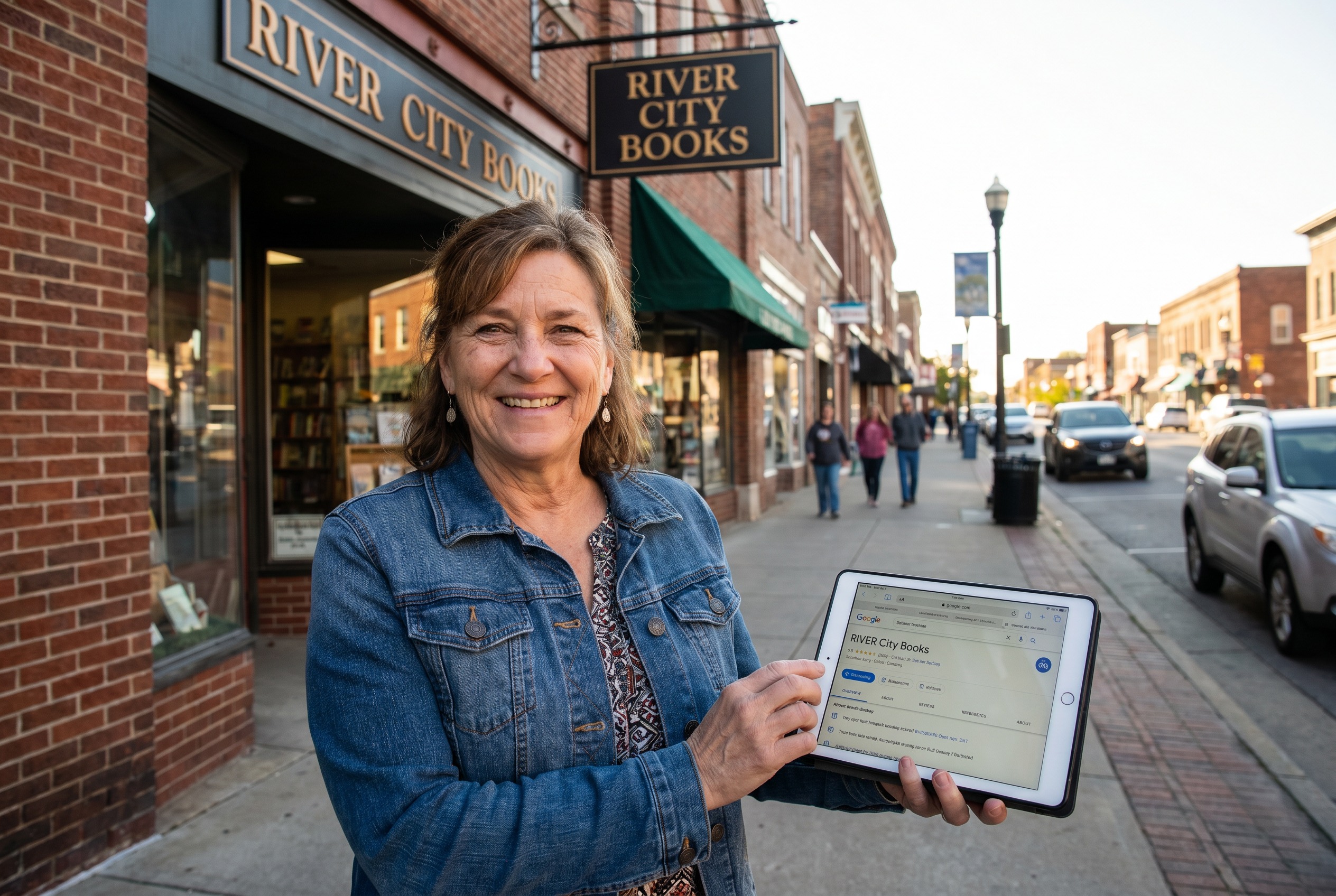
Competing with national brands can feel like a losing battle before it even starts. They’ve got bigger budgets, larger teams, and years of brand recognition built up across every channel imaginable. But here’s the thing: size doesn’t always win in search. Local SEO is one of the few areas of digital marketing where a well-run small business can genuinely outperform a national competitor, and it happens more often than most business owners realize.
If you’ve ever searched for a service near you and noticed that the results showing up aren’t the massive national chains but smaller, local businesses, that’s local SEO doing its job. Google’s goal is to surface the most relevant result for any given search, and for searches with local intent, relevance almost always means proximity and community trust. That’s an advantage that no national brand can buy its way out of.
Why National Brands Struggle With Local Search
National brands are optimized to rank broadly. Their SEO strategies are built around high-volume national keywords, which means they’re often too generalized to dominate hyper-local searches. A corporate roofing franchise ranking nationally for “roof repair” isn’t necessarily going to beat a local roofing company that has 200 Google reviews, a fully optimized Google Business Profile, and consistent mentions across local directories when someone in Lynchburg searches “roof repair near me.”
Local search results are also heavily influenced by factors that national brands have a hard time controlling: how often real customers leave reviews, whether the business information is accurate and consistent across the web, and how well the business engages with its local community online. These are things a locally-owned business can manage directly, while a national brand is often dependent on corporate processes that move slowly and treat every market the same.
According to Google’s own search documentation, local search rankings are influenced by relevance, distance, and prominence. Small businesses that focus on all three consistently will win local search, regardless of how much their national competitors are spending.
The Core Elements of a Strong Local SEO Strategy
Google Business Profile is the foundation. If your profile is incomplete, outdated, or unverified, you’re leaving a significant amount of local visibility on the table. Your profile should have accurate hours, a detailed business description that reflects how people actually search for your services, photos that are updated regularly, and a steady stream of genuine customer reviews. That last part matters more than most people expect. Businesses with more reviews and higher ratings consistently outrank competitors with thinner profiles, even when those competitors are better-known brands.
On-site SEO is the next layer. Your website needs to signal to Google exactly where you operate and what you do. That means having your city and service area referenced naturally throughout your content, using location-specific page titles and meta descriptions, and in some cases building out dedicated service area pages if you cover multiple markets. For a business serving Lynchburg and the surrounding Central Virginia region, this kind of geographic specificity helps you show up for searches that national brands are simply too broad to target effectively.
Citations and directory listings round out the picture. When your business name, address, and phone number appear consistently across platforms like Yelp, Angi, the Better Business Bureau, and local chamber directories, it reinforces your legitimacy in Google’s eyes. Inconsistencies in this data, even small ones like an old phone number or a slightly different address format, can quietly hurt your rankings. Cleaning that up is one of the lower-profile but high-impact things a solid SEO strategy addresses early on.
Content Still Matters, Especially Locally
One area where small businesses have a genuine edge over national brands is local content. A national company publishing generic blog posts about industry topics can’t compete with a local business writing about things that are actually relevant to the community they serve. A post that speaks directly to what businesses in Lynchburg face, references local context, or addresses questions that local customers are actually asking will connect in a way that templated national content never will.
This isn’t just about being relatable. Search engines reward content that demonstrates expertise and relevance to a specific audience. When your content consistently reflects your market and your community, it builds topical authority around local search terms over time. That’s compounding value that gets harder for competitors to displace the longer you keep building it.
Blogging, service pages, and FAQ content are all part of this. If someone searches “SEO for marketing in Lynchburg VA” or “digital marketing service Lynchburg” and lands on a page you’ve written that directly answers what they’re looking for, you’ve just turned a search ranking into a potential customer relationship. That’s the payoff.
Local SEO and Paid Search Work Well Together
Organic local SEO takes time to build, but it’s durable. Paid search, like Google Ads, can fill the gap while your organic rankings develop and can accelerate visibility for competitive terms in the meantime. For businesses in markets like Lynchburg where the competitive landscape is more manageable than a major metro, a well-run local Google Ads campaign can generate meaningful leads at a cost that makes sense. The two channels reinforce each other, and businesses that invest in both tend to dominate more of the available search real estate than those who pick one or the other.
At TinyBull Marketing, we work with small and medium-sized businesses across Central Virginia to build local SEO strategies that actually move the needle. Whether that’s tightening up a Google Business Profile, building out location-specific content, fixing citation inconsistencies, or running targeted Google Ads campaigns for competitive local terms, it all comes back to the same goal: making sure your business shows up when people in your market are looking for what you offer.
The Window of Opportunity Is Real, But It Won’t Stay Open Forever
Local SEO is still an area where a lot of small businesses haven’t fully invested, which means the opportunity to build a strong local presence before your competitors do is very much alive. That window doesn’t stay open indefinitely. As more businesses get serious about their digital presence, the rankings get more competitive and the cost of catching up goes up.
The businesses that start building now, putting in consistent work on their profiles, their content, and their technical SEO, are the ones that will hold strong positions in local search for years. The ones that wait are going to be paying a lot more to get there later, if they can get there at all.
If you’re ready to take local search seriously, TinyBull’s team is a good place to start the conversation. We’re a digital marketing agency in Lynchburg that specializes in helping local businesses compete smarter, not just louder.
Frequently Asked Questions
How is local SEO different from regular SEO?
Regular SEO focuses on ranking for broad search terms at a national or global scale. Local SEO is specifically about showing up in searches that have geographic intent, like “near me” searches or searches that include a city or region. It involves different tactics, including Google Business Profile optimization, local citations, and location-specific content.
How long does local SEO take to show results?
Most businesses start seeing noticeable improvement in local rankings within three to six months of consistent effort. Some changes, like fixing citation errors or completing a Google Business Profile, can have a faster impact. Building content authority takes longer but produces results that are harder for competitors to displace.
Can a small business really outrank a national brand in local search?
Yes, and it happens regularly. Google prioritizes relevance and local trust signals over brand size. A small business with strong reviews, accurate local listings, and locally relevant content will consistently outperform a national brand that hasn’t invested in those areas for a given local market.
Do I need to hire an agency to do local SEO?
Some basics, like claiming and completing your Google Business Profile, you can handle yourself. But a comprehensive local SEO strategy that includes technical optimization, content development, citation management, and ongoing tracking is difficult to execute well without experience. Working with a knowledgeable agency typically accelerates results and avoids the trial and error that comes with doing it in-house.