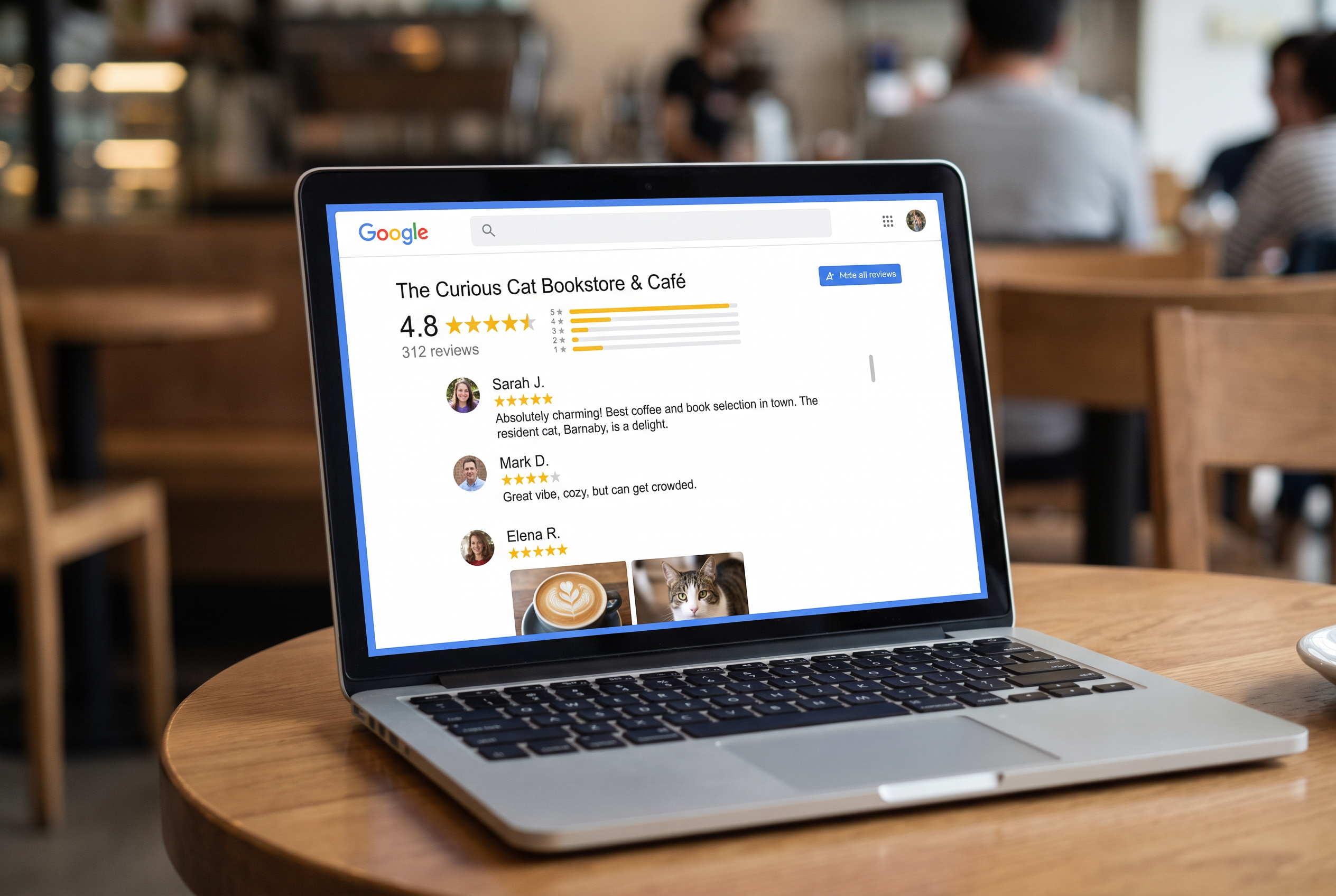
Why Customer Reviews Matter for Small Businesses Beyond Reputation

Customer reviews for small businesses do much more than create a good-looking star rating. They influence how potential customers compare companies, whether they trust what a business says about itself, what they do after discovering the business, and even how visible that company may be in local search.

For a small business, that makes reviews part of the entire customer journey. Someone may see your business in Google, read several recent reviews, visit your website, check your social media, and then decide whether to call or request a quote.

Reviews sit right in the middle of that decision-making process. They give prospective customers something marketing copy alone cannot provide: evidence from people who have already taken the chance.

Customer Reviews for Small Businesses Build Trust Before the First Conversation

Customers naturally want reassurance before spending money, particularly when the purchase involves a service provider they have never worked with before.

According to BrightLocal’s 2026 Local Consumer Review Survey, 97% of consumers read online reviews for local businesses. The same study found that 85% say positive reviews make them more likely to use a business, while 77% say negative reviews make them less likely to choose one.

That influence comes partly from specificity. A business can describe itself as responsive, professional, or reliable, but those claims carry more weight when customers repeatedly describe the same experience in their own words.

Patterns are especially powerful. BrightLocal also found that seeing similar sentiment repeated across multiple reviews is one of the strongest signals consumers use when evaluating a business. A single glowing testimonial is helpful. Dozens of customers independently praising communication, quality, cleanliness, or service creates a much stronger picture.

Reviews Often Lead Customers to Keep Researching

A positive review does not always produce an immediate sale. Often, it moves the customer into the next stage of research.

The BrightLocal study found that 54% of consumers visit a business’s website after reading positive reviews, while others continue reading reviews or visit the company’s social media profiles.

This is an important point for small businesses. Reviews do not operate in isolation. They send customers toward your website, social channels, service pages, photos, and other digital touchpoints.

If your reviews create a strong first impression but your website is outdated, difficult to navigate, or inconsistent with what customers are saying, that momentum can disappear. The same is true if a social profile looks abandoned or important business information is inaccurate.

Strong digital marketing connects those pieces. At TinyBull Marketing, reputation, website strategy, SEO, social media, and content are treated as connected parts of the customer experience rather than separate boxes to check.

Reviews Can Support Local Search Visibility

Reviews also matter beyond customer psychology. Google explains in its guidance on improving local rankings that local results are primarily influenced by relevance, distance, and prominence. Google also notes that more reviews and positive ratings can help a business’s local ranking.

That means reviews can support two goals at once: helping a business become more visible and helping customers feel more confident once they find it.

For a local service company in Lynchburg or elsewhere in Central Virginia, that combination can be particularly valuable. Someone searching for a contractor, dentist, restaurant, repair company, or other nearby provider may compare several businesses directly from Google Maps or local search results before visiting a website.

A complete Google Business Profile, accurate business information, current photos, recent reviews, and thoughtful responses can create a much stronger first impression.

You can explore more strategies for improving local visibility in TinyBull’s SEO resources.

Recent Reviews Matter More Than a Big Historical Total

A business may have hundreds of reviews, but customers still want to know what the company is like today.

BrightLocal’s 2026 survey found that 74% of consumers care about reviews written within the previous three months. Review recency matters because businesses change. Staff changes, ownership changes, service quality improves or declines, and older reviews may no longer reflect the current customer experience.

For small businesses, this means review generation should be an ongoing process rather than a one-time campaign.

A steady stream of genuine reviews also gives potential customers a more complete picture. Ten reviews collected this month and silence for the next three years does not tell the same story as consistent feedback arriving throughout the year.

Review Responses Are Part of the Customer Experience

Reviews are a public conversation. The response from the business can matter almost as much as the original feedback.

BrightLocal found that 37% of consumers consider whether the business owner responded when evaluating a review. Google also recommends responding to reviews because it shows customers that the business values their feedback.

Positive reviews deserve more than an identical “Thanks for the review!” pasted beneath every comment. A short, genuine response that acknowledges something specific about the customer’s experience feels much more human.

Negative reviews require even more care. A calm response can show prospective customers that the business takes complaints seriously and is willing to address problems. Arguing publicly, revealing private information, or responding defensively can magnify the original complaint.

The audience for your response is not only the person who wrote the review. It includes every potential customer who encounters that exchange months later.

Reviews Can Become Useful Marketing Content

A strong customer review does not have to remain buried on a third-party platform. With appropriate permission and accurate representation, customer feedback can also become useful social proof elsewhere in your marketing.

Reviews and testimonials can support website pages, social media graphics, sales materials, email campaigns, and case studies. They can reinforce the claims your business already makes by showing how those claims played out in a real customer experience.

A home service company might highlight feedback about communication and cleanup. A restaurant may feature comments about service or atmosphere. A professional firm might showcase reviews that mention responsiveness, expertise, or clarity.

The key is authenticity. Businesses should never manufacture feedback, selectively alter a review so that its meaning changes, or purchase fake reviews. The Federal Trade Commission’s Consumer Reviews and Testimonials Rule prohibits fake or false reviews and other deceptive review practices.

Google also prohibits incentivized reviews, including offering discounts, free goods, or services in exchange for customer feedback.

How to Ask Customers for Reviews Without Making It Awkward

Many satisfied customers are willing to leave feedback. They simply need to be asked at the right time and given an easy way to do it.

BrightLocal’s 2026 research found that consumers frequently respond when businesses ask for reviews, reinforcing the value of making review requests a normal part of customer follow-up.

The best moment usually comes shortly after a successful interaction, completed project, purchase, appointment, or other positive experience. A direct link to the relevant review platform removes unnecessary friction.

The request should ask for honest feedback rather than specifically asking for a positive review. Genuine reviews are more valuable because they create the believable patterns customers are looking for in the first place.

Google recommends making the review process easy by providing customers with a direct review link or QR code.

Reviews Work Best as Part of a Larger Marketing Strategy

Customer reviews can strengthen trust, local visibility, website conversions, social proof, and marketing content. Their impact becomes even greater when the surrounding digital presence supports the same message.

If customers repeatedly praise your expertise, your website should demonstrate that expertise. If reviews emphasize responsive service, your contact experience should make getting in touch easy. If people praise your team, social media can help customers see the people behind the business.

TinyBull helps small and medium-sized businesses connect reputation management with SEO, social media, website strategy, content, and other parts of digital marketing so customers encounter a consistent brand wherever they look.

You can explore additional insights in TinyBull’s brand management resources or browse the TinyBull blog for more practical marketing guidance.

If your customers already have good things to say about your business, those experiences should be helping you grow. The right review strategy makes it easier for future customers to see the evidence.

Frequently Asked Questions

Why are customer reviews important for small businesses?

Customer reviews help prospective customers evaluate trust, quality, and reliability before contacting a business. They can also support local search visibility and encourage customers to continue researching through the business’s website and social channels.

Do Google reviews help local SEO?

Yes. Google states that review quantity and positive ratings can contribute to local ranking as part of a business’s overall prominence.

How often should a small business ask for reviews?

Review requests should be part of an ongoing customer follow-up process. Consistent review generation helps keep feedback recent and gives potential customers a current picture of the business.

Can businesses offer discounts for Google reviews?

No. Google prohibits incentives such as free or discounted goods or services in exchange for reviews. Businesses should ask customers for honest feedback without requiring a positive rating.

 

Online Reputation Management for Small Businesses: Why Reviews Drive Growth

Online Reputation Management for Small Businesses: Why Reviews Drive Growth

Online reputation management for small businesses has become one of the most important parts of digital marketing because customers often decide whether they trust a business before they ever make contact.

They read Google reviews. They compare star ratings. They look for recent customer feedback. They check how a business responds when someone has a problem. They may also see reviews, comments, social posts, and recommendations across several platforms before reaching a website.

For local businesses in Lynchburg, throughout Central Virginia, and across the country, reputation can directly affect visibility, clicks, calls, and conversions. A business may have strong services, a skilled team, and a professional website, but if the online reputation looks thin, outdated, or unmanaged, potential customers may hesitate.

That is why reputation management should be treated as part of a growth strategy, not just cleanup when something goes wrong.

What Is Online Reputation Management?

Online reputation management is the process of monitoring, improving, and protecting how your business appears online. For small businesses, that usually includes Google reviews, Facebook recommendations, directory listings, social media comments, testimonials, star ratings, and brand mentions.

The goal is not to make every business look perfect. Customers do not expect perfection. They expect signs that a business is active, trustworthy, responsive, and consistent.

A strong reputation management strategy helps customers feel more confident choosing your business. It also helps search engines and online platforms better understand whether your company is credible in the local market.

Google’s local ranking guidance explains that local results are based primarily on relevance, distance, and prominence. Google also notes that more reviews and positive ratings can improve local ranking, which connects reputation directly to local search visibility (Google Business Profile Help).

Why Online Reputation Management for Small Businesses Matters

Online reputation management for small businesses matters because reviews often act as the bridge between being found and being chosen.

A potential customer may discover your business through a Google search, a social media post, a referral, or a paid ad. But before they call, book, visit, or request a quote, they are likely to look for proof. Reviews provide that proof in the customer’s own language.

BrightLocal’s 2026 Local Consumer Review Survey found that consumers continue to rely heavily on reviews when evaluating local businesses, with review freshness, star ratings, and business responses becoming increasingly important parts of the decision process (BrightLocal).

That behavior makes sense. Reviews help people reduce risk. A homeowner hiring a contractor, a patient choosing a dental office, or a business owner comparing marketing agencies wants reassurance before making a decision.

For small businesses, that reassurance can be the difference between a lead and a lost opportunity.

Reviews Influence Local SEO and Customer Trust

Reviews affect growth in two major ways: they can support local visibility, and they can influence whether people take action once they find you.

From a local SEO perspective, reviews contribute to the overall prominence of a business online. They are not the only ranking factor, but they are part of the trust signals search engines evaluate when showing local results. A business with consistent reviews, complete information, and active engagement sends stronger signals than a business with outdated or sparse feedback.

From a customer perspective, reviews help answer questions that a website may not fully answer. Did the company show up on time? Was the team professional? Did the service solve the problem? Did the business respond when something needed attention?

Those details matter because people trust patterns. One review may not change a decision, but a steady collection of recent, specific reviews can build confidence quickly.

This is especially important for small businesses competing against larger brands. Bigger companies may have more advertising power, but local businesses can often win trust through stronger relationships, better service, and visible community credibility.

Why Responding to Reviews Builds Credibility

Responding to reviews is one of the most overlooked parts of reputation management.

When a business responds to positive reviews, it shows appreciation. When it responds thoughtfully to negative reviews, it shows accountability. Both types of responses matter because they are visible to future customers.

A good response does not need to be long. It should be professional, specific when appropriate, and calm. Defensive or copy-paste responses can do more harm than good. Customers can usually tell when a business is genuinely paying attention.

Responding also helps keep your online presence active. A Google Business Profile with recent reviews, current business information, updated photos, and professional responses looks more trustworthy than a profile that appears neglected.

For busy business owners, this can be difficult to manage consistently. Reviews come in at different times, across different platforms, and not always when the business has time to respond. That is why review management often works best as part of a larger marketing process.

Reputation Management Extends Beyond Google Reviews

Google reviews are important, but they are only one piece of online reputation.

Customers may also encounter your business through Facebook, Instagram, LinkedIn, YouTube, Yelp, BBB, industry directories, local listings, and social media comments. In 2026, reputation can even influence how businesses are discussed in AI-generated recommendations and search experiences, making consistent online trust signals more important across the web (BrightLocal).

This is where reputation management connects with social media and brand management. If your social channels are active, your business information is consistent, and your customer feedback is visible, people see a more complete picture of your company.

A strong reputation should feel consistent everywhere a customer looks.

At TinyBull Marketing, reputation management is often connected with SEO, social media marketing, content strategy, and website development because customers rarely make decisions from one source. They compare signals across several places before choosing who to trust.

How Small Businesses Can Strengthen Their Online Reputation

Small businesses can start by making review generation part of the customer experience. The best time to ask for a review is usually after a successful interaction, completed project, positive appointment, or strong customer service moment.

The request should be simple and ethical. Businesses should never buy fake reviews or offer incentives in exchange for positive feedback. In 2024, the Federal Trade Commission finalized a rule targeting fake reviews and deceptive review practices, which makes honest reputation building even more important (FTC).

It also helps to make the process easy. Customers are more likely to leave reviews when they receive a direct link and a clear request. Staff should know when and how to ask, and the business should have a system for tracking review activity over time.

Once reviews come in, responses should be timely and professional. Positive reviews deserve appreciation. Negative reviews should be handled carefully, with attention to tone, privacy, and resolution where possible.

Reputation management also includes keeping listings accurate. Business name, address, phone number, hours, services, and website links should be consistent across major platforms. Inconsistent information can confuse customers and weaken local search signals.

How TinyBull Helps Businesses Manage Reputation and Growth

Reputation management can feel like one more spinning plate for business owners who are already handling operations, customers, staffing, sales, and service delivery.

TinyBull helps small and medium-sized businesses build stronger online reputations through connected digital marketing strategies. That can include review management, local SEO, social media management, brand monitoring, website improvements, and content that reinforces trust.

The goal is not just to collect more reviews, but to create a stronger online presence that helps potential customers feel confident choosing your business.

You can learn more about TinyBull’s broader approach to digital growth on the About Us page, explore related insights in the brand management resources, or browse additional marketing guidance on the TinyBull blog.

If your business has strong service but an inconsistent online reputation, now is the time to close that gap. A better reputation can support better visibility, stronger trust, and more qualified leads.

Frequently Asked Questions

What is online reputation management for small businesses?

Online reputation management for small businesses is the process of monitoring and improving how a company appears online through reviews, ratings, social media, business listings, testimonials, and customer feedback.

Do reviews help local SEO?

Yes. Reviews can support local SEO because Google considers review count, review score, and overall prominence when evaluating local businesses. Reviews also influence whether customers choose to click, call, or request a quote.

How should small businesses respond to negative reviews?

Small businesses should respond calmly, professionally, and specifically when possible. The response should acknowledge the concern, avoid arguments, and offer an appropriate next step without sharing private customer details.

How can a business get more reviews?

Businesses can get more reviews by asking satisfied customers at the right time, providing a direct review link, training staff to request feedback, and making review generation part of the normal customer follow-up process.

Digital Reputation Management: How TinyBull Builds Trust and Visibility Online

In today’s highly connected digital world, a brand’s online image can make or break its success. Customers no longer rely only on advertisements; they read reviews, search brand names on Google, and check social media before making decisions. This is where Digital Reputation Management becomes essential. At TinyBull, we help businesses protect, enhance, and grow their online reputation using strategic and ethical digital methods.

What Is Digital Reputation Management?

Digital Reputation Management is the process of monitoring, influencing, and improving how a brand is perceived online. It includes managing customer reviews, responding to feedback, improving search engine results, and promoting positive content across digital platforms. A strong digital reputation builds credibility, attracts customers, and increases long-term business value.

For modern businesses, reputation is no longer optional it is a core asset. Negative reviews, outdated information, or poor search visibility can quickly damage trust. TinyBull focuses on proactive reputation strategies that keep your brand image strong and consistent.

The Role of online reputation management seo

One of the most powerful components of reputation building is online reputation management seo. This approach ensures that when users search for your brand, they find accurate, positive, and high-quality content on the first page of search engines. SEO plays a critical role in pushing down negative links and promoting trusted sources such as websites, blogs, press releases, and reviews.

At TinyBull, our online reputation management seo strategy combines keyword optimization, content creation, link building, and technical SEO. The goal is not just rankings, but control over how your brand story appears online.

Why Businesses Need Reputation Management Today

Consumers trust online information more than ever. Studies show that most users read reviews before purchasing a product or service. Even a few negative results can impact conversions. Digital Reputation Management helps businesses:

  • Build trust and credibility
  • Improve customer confidence
  • Increase conversions and sales
  • Protect brand value during crises
  • Strengthen long-term online presence

TinyBull understands that every brand is unique. That’s why we customize reputation strategies based on industry, competition, and target audience.

How TinyBull Manages Digital Reputation Effectively

At TinyBull, we follow a structured approach to Digital Reputation Management that delivers measurable results:

  1. Online Monitoring – Tracking brand mentions, reviews, and search results across platforms.
  2. Review Management – Encouraging positive reviews and professionally responding to negative feedback.
  3. SEO-Driven Content – Publishing blogs, articles, and PR content optimized for online reputation management seo.
  4. Search Result Optimization – Improving branded keywords to dominate page-one results.
  5. Social Media Presence – Building consistent and positive brand engagement on social platforms.

This integrated strategy ensures that your brand always presents a trustworthy and professional image online.

Benefits of Choosing TinyBull

When you partner with TinyBull, you get more than just reputation repair you gain a growth partner. Our team focuses on sustainable and ethical techniques that align with search engine guidelines. We believe in transparency, long-term results, and real brand value.

With Digital Reputation Management, businesses can turn feedback into opportunities and challenges into strengths. Our expertise in online reputation management seo ensures that your brand not only survives online scrutiny but thrives in it.

Your online reputation is your digital identity. Managing it effectively requires expertise, consistency, and smart SEO strategies. TinyBull specializes in Digital Reputation Management that protects your brand, boosts visibility, and builds lasting trust. By combining reputation strategies with online reputation management seo, we help businesses stay ahead in an increasingly competitive digital landscape.

If you want to control your brand narrative and build a powerful online presence, TinyBull is your trusted partner for reputation success.

Managing Brand Reputation with TinyBull: How Online Reputation Management SEO Builds Trust and Growth

In today’s digital age, your brand’s reputation is more powerful than ever. A single online review, comment, or social media mention can shape how people perceive your business. That’s why managing brand reputation has become a vital aspect of every successful marketing strategy. At TinyBull, we understand that your brand’s image is your most valuable asset, and our goal is to help you protect, enhance, and grow it through expert online reputation management SEO techniques.

Understanding the Importance of Managing Brand Reputation

Your brand reputation is the public perception of your business across all digital platform,s search engines, social media, review sites, and news outlets. When people search for your company online, what they see first often determines whether they’ll trust you or not.

Managing brand reputation involves more than just responding to reviews; it’s about creating a consistent, positive brand image across all channels. It includes monitoring mentions, promoting positive content, addressing negative feedback, and implementing SEO-driven strategies to push favorable content to the top of search results.

At TinyBull, we specialize in helping businesses build credibility, attract new customers, and retain loyal ones through effective digital reputation management.

Why Online Reputation Management SEO Matters

Search engines like Google play a major role in shaping your online reputation. When potential customers look you up, they rarely go beyond the first page of search results. This is where online reputation management SEO becomes crucial.

By optimizing positive content such as press releases, blog posts, customer testimonials, and social profiles, TinyBull ensures that your best digital assets rank higher on Google. Simultaneously, negative or misleading information is pushed down in search results, minimizing its visibility and impact.

In short, online reputation management SEO helps control the narrative around your brand. It allows you to influence what people see first, building trust and authority in your industry.

TinyBull Proven Approach to Managing Brand Reputation

At TinyBull, we use a comprehensive, data-driven strategy for managing brand reputation. Our process includes:

  1. Brand Monitoring and Analysis:
    We continuously monitor mentions, reviews, and discussions about your brand across all digital channels. Using advanced tools, we track both positive and negative sentiments to understand your current online standing.
    SEO Optimization of Positive Content:
    Through our online reputation management SEO expertise, we optimize high-quality content that reflects your brand’s strengths from blogs and articles to social media posts and press releases ensuring they rank higher on search engines.
  2. Crisis Management:
    If your brand faces a sudden reputation crisis, TinyBull acts quickly to mitigate the damage. We create and distribute positive, authoritative content to rebuild trust and restore your image.
  3. Review and Feedback Management:
    Customer feedback is essential for credibility. We help you manage online reviews on platforms like Google, Yelp, and social media to maintain a healthy balance of genuine positive experiences.
  4. Ongoing Reputation Enhancement:
    Managing brand reputation is not a one-time task. TinyBull provides continuous support, ensuring your brand image evolves positively with every new development.

Benefits of Effective Online Reputation Management SEO

When done right, online reputation management SEO delivers long-term results that go beyond just visibility. Here are some benefits of working with TinyBull:

  • Increased Trust and Credibility: Positive search results build confidence among potential customers and business partners.
  • Higher Conversion Rates: A strong online image translates to more leads, more sales, and better customer retention.
  • Improved Search Engine Rankings: Our SEO-driven reputation strategies enhance your brand’s overall visibility and organic reach.
  • Protection from Negative Publicity: By staying proactive, you prevent harmful content from defining your brand.
  • Sustainable Growth: A strong reputation contributes to brand loyalty and long-term success.

TinyBull: Your Partner in Building a Strong Digital Image

At TinyBull, we believe that every brand deserves to be seen in its best light. Our team of digital marketing and SEO experts works tirelessly to ensure that your brand’s story is told the right way through positive search results, engaging content, and authentic online interactions.

Whether you’re a startup looking to establish your presence or an established company aiming to protect your reputation, TinyBull provides the expertise and technology to help you succeed. Our holistic approach to managing brand reputation ensures that your business remains credible, trustworthy, and resilient in today’s competitive digital landscape.

In a world where online perception can make or break a business, managing brand reputation is not optional; it’s essential. With TinyBull online reputation management SEO strategies, you gain control over your digital image, turning potential challenges into opportunities for growth.

Let TinyBull help you shape a reputation that truly reflects the quality and integrity of your brand. Because when your brand shines online, success follows naturally.

TinyBull Revolutionary Approach to Brand Reputation Management in the USA: Safeguard Your Brand with Strategy and Trust

Today, a single negative review, viral tweet, or misstep can spiral into a brand crisis. This is where TinyBull, a leader in Brand Reputation Management USA, steps in with a proactive, innovative, and personalized approach to protecting your name.

What Is Brand Reputation Management and Why It Matters

Whether it’s a glowing customer review, a frustrated comment on social media, or a news mention—brand reputation management ensures that your business is represented in the best possible light.

A strong reputation builds trust, drives customer loyalty, and gives you an edge over the competition. On the other hand, a damaged reputation can lead to lost customers, reduced sales, and long-term brand erosion.

How TinyBull Is Transforming Brand Reputation Management in the USA

TinyBull doesn’t just manage reputations — we elevate them. Our strategic, multi-layered system helps businesses build credibility, engage audiences, and respond to public sentiment in real time.

 1. 360-Degree Reputation Monitoring

We track every online mention of your brand — from reviews to blog mentions and social media discussions. This allows us to quickly identify risks, trends, and opportunities to shape a better brand narrative.

 2. Personalized Strategy

Each brand is unique. That’s why TinyBull designs customized plans tailored to your brand’s voice, audience, and challenges. No templates. No shortcuts. Only meaningful results.

 3. Crisis Response & Damage Control

Bad publicity can happen to anyone. What matters is how you respond. Our expert team manages PR crises with speed, empathy, and professionalism to help restore your reputation.

 4. Boosting Positive Visibility

We create high-quality content—blogs, press releases, interviews—that reflects your brand’s strengths. Through advanced SEO strategies, this content is positioned where it matters most: the top of search results.

 5. Review Management and Generation

We help you build a positive review profile across platforms like Google, Yelp, and Trustpilot. Our team also assists in responding to negative reviews in a way that shows accountability and care.

Why Brands Across the USA Trust TinyBull

  • Deep industry experience
  • Transparent, results-driven strategies
  • Real-time reputation tracking tools
  • Personalized customer support

At TinyBull, our mission is to protect what you’ve worked hard to build. We’re not just fixing problems — we’re crafting sustainable brand trust for long-term growth.

Your brand’s image is one of your greatest assets. With TinyBull’s expertise in Brand Reputation Management USA, you can turn challenges into opportunities and doubts into trust. Let us help you protect, promote, and prevail—with confidence.