Why Customer Reviews Matter for Small Businesses Beyond Reputation
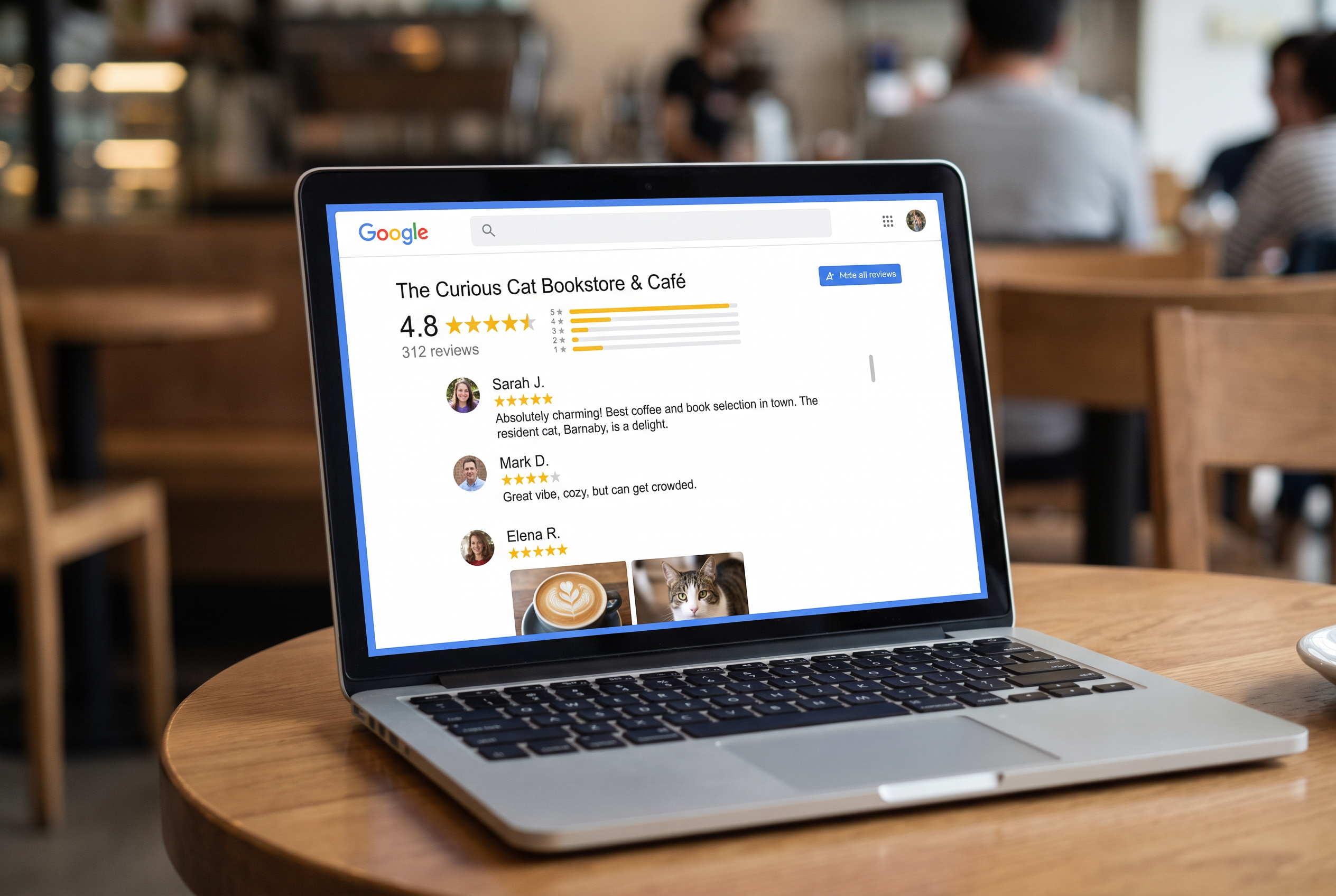
Customer reviews for small businesses do much more than create a good-looking star rating. They influence how potential customers compare companies, whether they trust what a business says about itself, what they do after discovering the business, and even how visible that company may be in local search.
For a small business, that makes reviews part of the entire customer journey. Someone may see your business in Google, read several recent reviews, visit your website, check your social media, and then decide whether to call or request a quote.
Reviews sit right in the middle of that decision-making process. They give prospective customers something marketing copy alone cannot provide: evidence from people who have already taken the chance.
Customer Reviews for Small Businesses Build Trust Before the First Conversation
Customers naturally want reassurance before spending money, particularly when the purchase involves a service provider they have never worked with before.
According to BrightLocal’s 2026 Local Consumer Review Survey, 97% of consumers read online reviews for local businesses. The same study found that 85% say positive reviews make them more likely to use a business, while 77% say negative reviews make them less likely to choose one.
That influence comes partly from specificity. A business can describe itself as responsive, professional, or reliable, but those claims carry more weight when customers repeatedly describe the same experience in their own words.
Patterns are especially powerful. BrightLocal also found that seeing similar sentiment repeated across multiple reviews is one of the strongest signals consumers use when evaluating a business. A single glowing testimonial is helpful. Dozens of customers independently praising communication, quality, cleanliness, or service creates a much stronger picture.
Reviews Often Lead Customers to Keep Researching
A positive review does not always produce an immediate sale. Often, it moves the customer into the next stage of research.
The BrightLocal study found that 54% of consumers visit a business’s website after reading positive reviews, while others continue reading reviews or visit the company’s social media profiles.
This is an important point for small businesses. Reviews do not operate in isolation. They send customers toward your website, social channels, service pages, photos, and other digital touchpoints.
If your reviews create a strong first impression but your website is outdated, difficult to navigate, or inconsistent with what customers are saying, that momentum can disappear. The same is true if a social profile looks abandoned or important business information is inaccurate.
Strong digital marketing connects those pieces. At TinyBull Marketing, reputation, website strategy, SEO, social media, and content are treated as connected parts of the customer experience rather than separate boxes to check.
Reviews Can Support Local Search Visibility
Reviews also matter beyond customer psychology. Google explains in its guidance on improving local rankings that local results are primarily influenced by relevance, distance, and prominence. Google also notes that more reviews and positive ratings can help a business’s local ranking.
That means reviews can support two goals at once: helping a business become more visible and helping customers feel more confident once they find it.
For a local service company in Lynchburg or elsewhere in Central Virginia, that combination can be particularly valuable. Someone searching for a contractor, dentist, restaurant, repair company, or other nearby provider may compare several businesses directly from Google Maps or local search results before visiting a website.
A complete Google Business Profile, accurate business information, current photos, recent reviews, and thoughtful responses can create a much stronger first impression.
You can explore more strategies for improving local visibility in TinyBull’s SEO resources.
Recent Reviews Matter More Than a Big Historical Total
A business may have hundreds of reviews, but customers still want to know what the company is like today.
BrightLocal’s 2026 survey found that 74% of consumers care about reviews written within the previous three months. Review recency matters because businesses change. Staff changes, ownership changes, service quality improves or declines, and older reviews may no longer reflect the current customer experience.
For small businesses, this means review generation should be an ongoing process rather than a one-time campaign.
A steady stream of genuine reviews also gives potential customers a more complete picture. Ten reviews collected this month and silence for the next three years does not tell the same story as consistent feedback arriving throughout the year.
Review Responses Are Part of the Customer Experience
Reviews are a public conversation. The response from the business can matter almost as much as the original feedback.
BrightLocal found that 37% of consumers consider whether the business owner responded when evaluating a review. Google also recommends responding to reviews because it shows customers that the business values their feedback.
Positive reviews deserve more than an identical “Thanks for the review!” pasted beneath every comment. A short, genuine response that acknowledges something specific about the customer’s experience feels much more human.
Negative reviews require even more care. A calm response can show prospective customers that the business takes complaints seriously and is willing to address problems. Arguing publicly, revealing private information, or responding defensively can magnify the original complaint.
The audience for your response is not only the person who wrote the review. It includes every potential customer who encounters that exchange months later.
Reviews Can Become Useful Marketing Content
A strong customer review does not have to remain buried on a third-party platform. With appropriate permission and accurate representation, customer feedback can also become useful social proof elsewhere in your marketing.
Reviews and testimonials can support website pages, social media graphics, sales materials, email campaigns, and case studies. They can reinforce the claims your business already makes by showing how those claims played out in a real customer experience.
A home service company might highlight feedback about communication and cleanup. A restaurant may feature comments about service or atmosphere. A professional firm might showcase reviews that mention responsiveness, expertise, or clarity.
The key is authenticity. Businesses should never manufacture feedback, selectively alter a review so that its meaning changes, or purchase fake reviews. The Federal Trade Commission’s Consumer Reviews and Testimonials Rule prohibits fake or false reviews and other deceptive review practices.
Google also prohibits incentivized reviews, including offering discounts, free goods, or services in exchange for customer feedback.
How to Ask Customers for Reviews Without Making It Awkward
Many satisfied customers are willing to leave feedback. They simply need to be asked at the right time and given an easy way to do it.
BrightLocal’s 2026 research found that consumers frequently respond when businesses ask for reviews, reinforcing the value of making review requests a normal part of customer follow-up.
The best moment usually comes shortly after a successful interaction, completed project, purchase, appointment, or other positive experience. A direct link to the relevant review platform removes unnecessary friction.
The request should ask for honest feedback rather than specifically asking for a positive review. Genuine reviews are more valuable because they create the believable patterns customers are looking for in the first place.
Google recommends making the review process easy by providing customers with a direct review link or QR code.
Reviews Work Best as Part of a Larger Marketing Strategy
Customer reviews can strengthen trust, local visibility, website conversions, social proof, and marketing content. Their impact becomes even greater when the surrounding digital presence supports the same message.
If customers repeatedly praise your expertise, your website should demonstrate that expertise. If reviews emphasize responsive service, your contact experience should make getting in touch easy. If people praise your team, social media can help customers see the people behind the business.
TinyBull helps small and medium-sized businesses connect reputation management with SEO, social media, website strategy, content, and other parts of digital marketing so customers encounter a consistent brand wherever they look.
You can explore additional insights in TinyBull’s brand management resources or browse the TinyBull blog for more practical marketing guidance.
If your customers already have good things to say about your business, those experiences should be helping you grow. The right review strategy makes it easier for future customers to see the evidence.
Frequently Asked Questions
Why are customer reviews important for small businesses?
Customer reviews help prospective customers evaluate trust, quality, and reliability before contacting a business. They can also support local search visibility and encourage customers to continue researching through the business’s website and social channels.
Do Google reviews help local SEO?
Yes. Google states that review quantity and positive ratings can contribute to local ranking as part of a business’s overall prominence.
How often should a small business ask for reviews?
Review requests should be part of an ongoing customer follow-up process. Consistent review generation helps keep feedback recent and gives potential customers a current picture of the business.
Can businesses offer discounts for Google reviews?
No. Google prohibits incentives such as free or discounted goods or services in exchange for reviews. Businesses should ask customers for honest feedback without requiring a positive rating.